Madhur Sangrah - Where Paper Meets Pixel

If You want to read these contents or you have any complain or suggestions please write to editor.madhursangrah@gmail.com
If You want to read these contents or you have any complain or suggestions please write to editor.madhursangrah@gmail.com
Translate
ACK-SPL-E-Mahadeva
Sunday, 22/03/2026 07:51 PM
ACK-SPL-E-Mahadeva
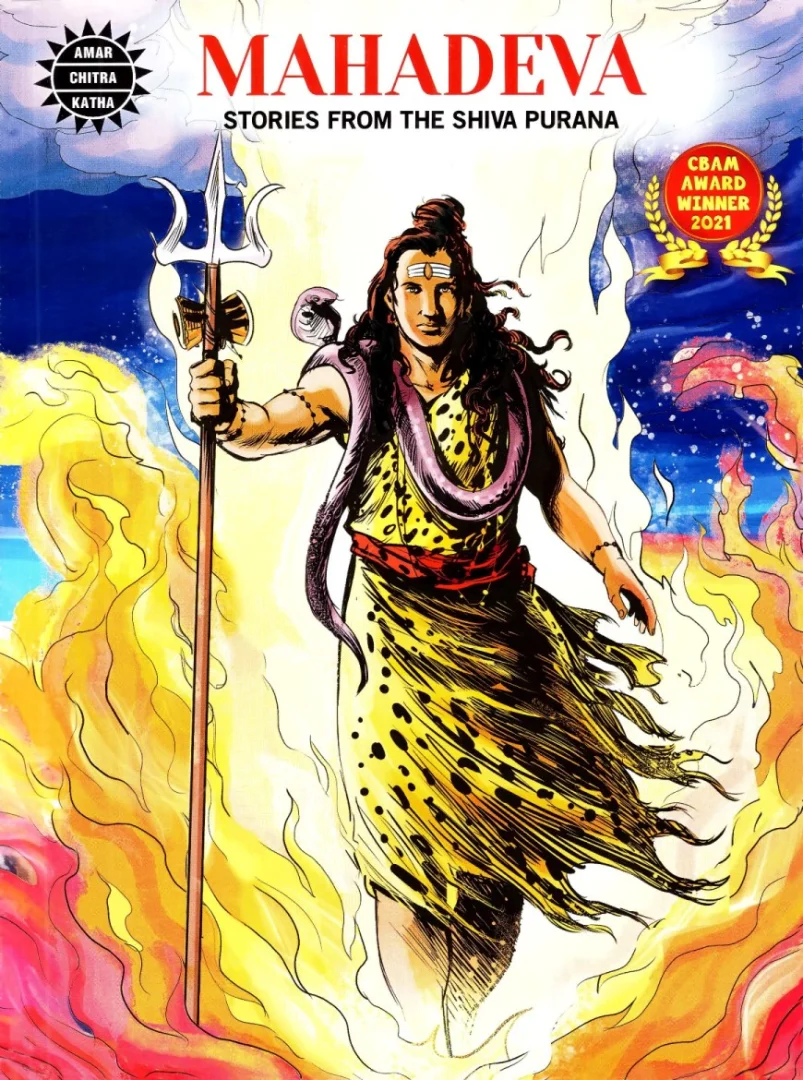
Mahadeva : Stories from the Shiv Purana
 MAHADEVA
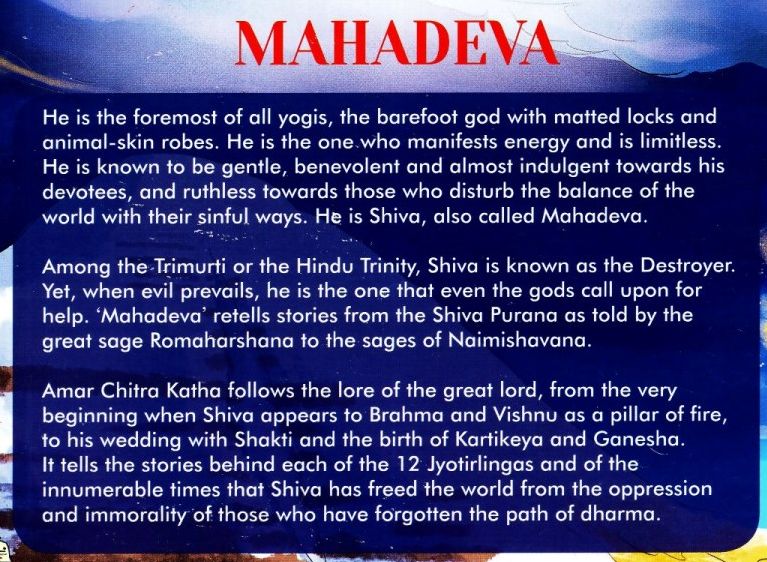
He is the foremost of all yogis, the barefoot god with matted locks and animal-skin robes. He is the one who manifests energy and is limitless. He is known to be gentle, benevolent and almost indulgent towards his devotees, and ruthless towards those who disturb the balance of the world with their sinful ways. He is Shiva, also called Mahadeva. Among the Trimurti or the Hindu Trinity, Shiva is known as the Destroyer. Yet, when evil prevails, he is the one that even the gods call upon for help. 'Mahadeva' retells stories from the Shiva Purana as told by the great sage Romaharshana to the sages of Naimishavana. Amar Chitra Katha follows the lore of the great lord, from the very beginning when Shiva appears to Brahma and Vishnu as a pillar of fire, to his wedding with Shakti and the birth of Kartikeya and Ganesha. It tells the stories behind each of the 12 Jyotirlingas and of the innumerable times that Shiva has freed the world from the oppression and immorality of those who have forgotten the path of dharma.
🌼 Mahadeva – Stories from the Shiva Purana (Summary)
This comic tells us beautiful and powerful stories about Lord Shiva, one of the most important gods in Hinduism. He is also called Mahadeva, which means the greatest god. The stories come from ancient books called the Puranas.
🌍 Introduction – What are the Puranas?
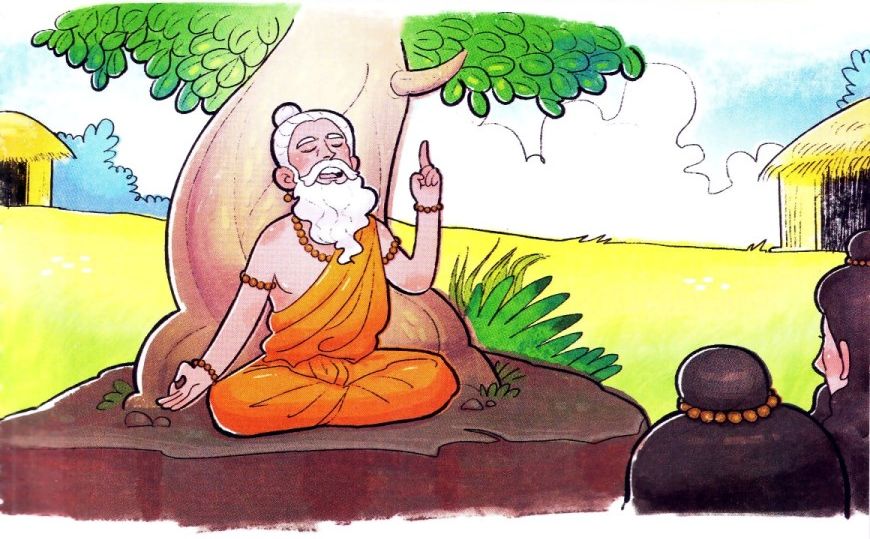 The story begins by explaining that the Puranas are very old stories about gods, creation, and the world. Long ago, wise sages shared these stories with people so they could understand life better. Puranas are religious texts composed in Sanskrit. They may have been orally narrated for centuries before being written down from 2nd century CE onwards. They are part of the sacred literature of the Hindu faith that comprises, chronologically, of the Vedas, Brahmanas, Aranyakas, Upanishads, the Epics and the Puranas. The earliest form of Hindu worship was concentrated around the rite of yagna or Vedic sacrifice. The gods of the Vedic age were linked to natural phenomena, such as Indra (god of thunder and rain), Vayu (god of wind), Agni (god of fire), Surya (sun god), Chandra (moon god), and so on. The Vedic myth of creation speaks of vast cosmic oceans energised into life by a combination of heat, light, air, and the power of thought or desire. Brahma, the Creator, was seen as a powerful creative force, who materialised the world and living things from his physical body or just with his mind.
Over the centuries, numerous ideas, local traditions and folklore across the land were assimilated into Hindu practice. Gradually, religious feeling came to focus on supreme deities such as Shiva, Vishnu and the Devi, and the worship of their images in temples and homes. A large pantheon of gods came into being, in an interlinked mythology, which was described in detail in the two epics, the Mahabharata and the Ramayana, and in the Puranas.
There are 18 mahapuranas (major puranas), and 18 upapuranas (minor puranas). They commonly contain stories of the origin of the specific purana, myths and legends of the key divinities, methods of worship, the stories of the places of pilgrimage, and a listing of the genealogies of gods, sages and kings. Puranas were also very useful for rulers who sought to link their dynasties to celestial or divine origin.
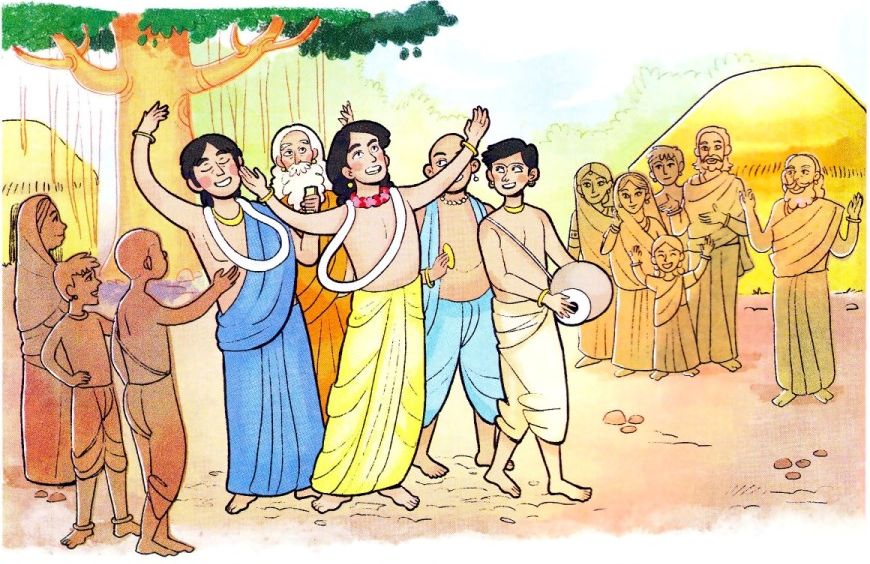 Each purana is said to have been narrated to groups of sages by a suta (storyteller), who claimed to have heard it from the ancient rishi Vyasa, who in turn claimed to have heard it directly from one of the gods. Most of the major puranas focus on a central deity, for example the Bhagavata Purana talks about the life and stories of Vishnu. The principal deity of the Shiva Purana is Shiva. Different sections narrate stories that explain the nature and origin of Shiva, the legend of the marriage of Shiva and Parvati and the birth of their children, Ganesha and Kartikeya. Also told are all the stories of the major shrines associated with Shivabhakti (Devotion to Shiva). In Puranic tales, the Vedic gods such as Indra, Vayu and Surya are all subservient to the triad of Brahma, Vishnu and Shiva. Over the centuries, Brahma also lost his position as the supreme creator, as can be seen by the power tussles in many myths, between Brahma and either Shiva or Vishnu.
It is important to remember that mythology reflects the ideas of society at the time that the stories were composed. What we see in the Puranas is the journey of Hindu thought across the sub-continent, gathering ideas and absorbing practices from many communities in towns, villages and forests.
We learn that:
-
The universe was created by Brahma
-
It is protected by Vishnu
-
And transformed or changed by Shiva
Shiva is special because he represents both destruction and new beginnings.
 🔥 In the Beginning
A group of sages once gathered in a forest and started discussing an important question:
👉 Who is the greatest god?
They invited a storyteller named Suta to answer this question. He began telling a story to explain the truth.
🔥 The Story of the Lingam of Fire
Suta told a famous story about Brahma and Vishnu. One day, Brahma and Vishnu started arguing:
-
Brahma said, “I am the creator, so I am the greatest!”
-
Vishnu said, “I protect the world, so I am greater!”
Suddenly, a huge pillar of fire (Lingam) appeared between them. It was endless—no beginning and no end!
They decided:
-
Vishnu would go down to find the bottom
-
Brahma would fly up to find the top
But:
-
Vishnu could not find the end below
-
Brahma could not find the top above
At last, they realized the truth:
👉 The fiery pillar was Lord Shiva, who is infinite and beyond everything.
Shiva appeared and taught them a lesson:
-
Always be truthful
-
Do not be proud
🙏 Meaning of the Lingam and Yoni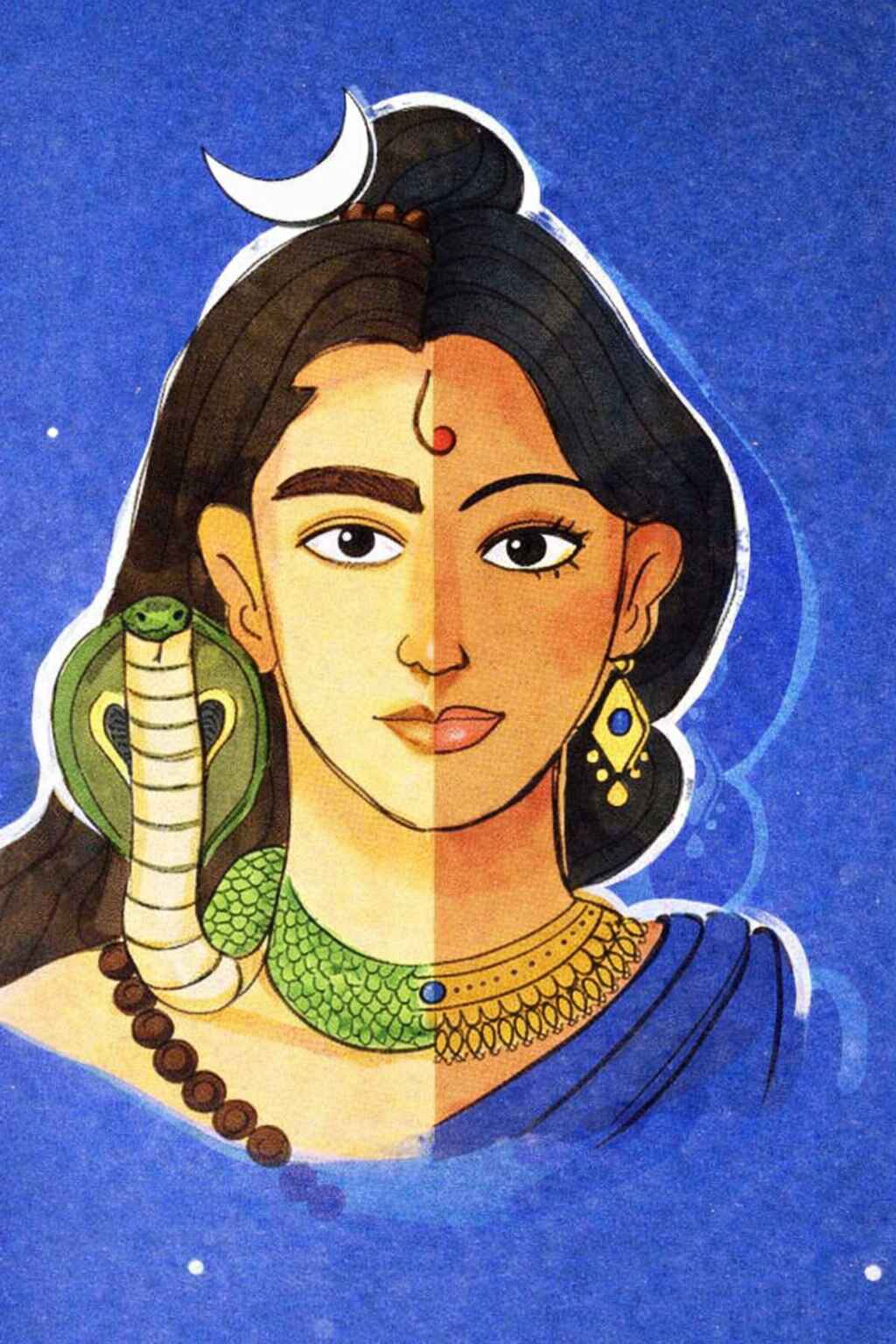
The story explains that:
-
The Lingam represents Shiva
-
The Yoni represents Shakti (his divine energy)
Together, they show:
👉 Creation, balance, and harmony in the universe.
🕉️ Worship of Shiva
People worship Shiva in many ways:
-
By praying
-
By chanting his name
-
By visiting temples
Some people repeat “Om Namah Shivaya” again and again to feel peaceful and close to Shiva.
🌟 The Many Names of Shiva
Shiva has many names, and each name tells us something about him:
-
Maheshwara – Lord of all
-
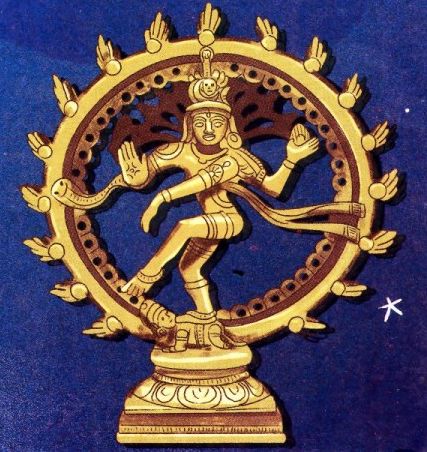
Nataraja – King of dance
-
Bholenath – Kind and simple god
-
Rudra – Powerful and fierce form
-
Gangadhara – One who holds the river Ganga
This shows that Shiva has many forms—sometimes calm, sometimes strong, but always caring.
📖 The Tale of Gunanidhi
The comic also tells the story of a boy named Gunanidhi.
-
He was careless and did wrong things
-
He did not listen to his parents
-
But later, he unknowingly did something good connected to Shiva
Because of this small good act:
👉 Shiva forgave him and blessed him
Lesson:
Even a small good deed can change your life.
 💡 What We Learn from This Comic
This comic teaches many simple but important lessons:
✨ Be honest
✨ Do not be proud
✨ Always try to do good
✨ Respect others
✨ God is everywhere and infinite
🌈 Conclusion
The stories of Mahadeva show us that Lord Shiva is powerful, kind, and wise. He teaches us how to live a good life and reminds us that truth and goodness always win.
- Title : Mahadeva : Stories from the Shiv Purana
- Category : Epics & Mythology
- Volume/Serial : SPL
- Total Pages : 196
- Script : English
- First Published : Feburary 2024
- Publisher : Amar Chitra Katha


Leave a Reply